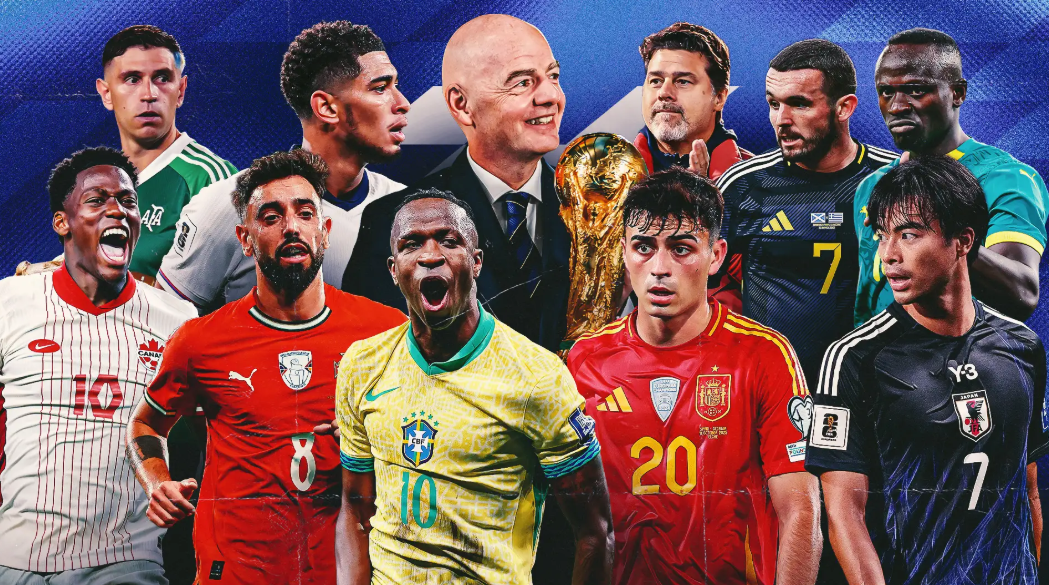
Mexico: The wait is over. After years of anticipation, planning, and debate, the 2026 FIFA World Cup has finally arrived, ushering in a new chapter in the history of the world’s most popular sporting event.
As football fans across continents prepare for a month of drama, emotion, and unforgettable moments, this edition of the World Cup promises to be unlike any that came before it. Bigger than ever, spread across three nations, and featuring a record number of teams, the tournament represents both football’s extraordinary growth and the challenges that come with such ambition.

The opening match in Mexico City marks the beginning of a 39-day football marathon that will culminate with the final in New Jersey on July 19. By then, 48 nations will have battled through 104 matches in what FIFA hopes will become the defining sporting spectacle of the decade.
Yet beyond the excitement lies a fascinating question: can the largest World Cup ever staged deliver on its promise?
A Tournament on an Unprecedented Scale
For the first time in history, the FIFA World Cup is being hosted by three countries simultaneously—Canada, Mexico, and the United States.
The numbers alone are staggering.
Forty-eight teams will compete instead of the traditional 32. Sixteen host cities will welcome supporters from every corner of the globe. More than one hundred matches will be played across North America, creating a sporting event of unmatched scale.
For FIFA, this expansion represents a bold vision of inclusivity. More nations have qualified, giving emerging football countries an opportunity to participate on the grandest stage. New markets are being engaged, and global interest has reached record levels.
However, critics argue that expansion comes with compromises. More teams mean more matches, greater travel demands, and the possibility of uneven contests during the group stage. Traditionalists worry that football’s most prestigious tournament may lose some of the exclusivity that once made qualification such an achievement.
Still, there is little doubt that the global appetite for the World Cup remains enormous.
Messi’s Final Dance?
Few storylines have captured the imagination of fans more than the possibility that this could be the last World Cup appearance of Lionel Messi.
Having already delivered Argentina’s long-awaited world title in 2022, Messi enters the tournament with little left to prove. Yet football’s greatest stars rarely stop chasing history.
At 39, questions naturally surround his fitness and ability to endure a long tournament. But if the past two decades have taught football supporters anything, it is that writing off Messi is usually a mistake.
A second consecutive World Cup triumph would elevate his legacy to even greater heights and provide one of sport’s most poetic endings.
For Argentina, the challenge is balancing experience with renewal. The core of the championship-winning squad remains intact, but the demands of defending a title are often greater than winning one.
Europe Leads the Charge
While Argentina commands enormous attention, many analysts believe the strongest contenders once again come from Europe.
Spain national football team enters the tournament carrying considerable momentum. Combining youthful brilliance with tactical sophistication, Spain appears perfectly positioned for another golden era.
The emergence of stars such as Lamine Yamal alongside established talents has transformed Spain into one of the most balanced sides in world football.
Close behind are France national football team, perennial contenders blessed with extraordinary depth and athleticism. Led by Kylian Mbappé, France possesses enough quality to challenge any opponent and capture a third world title.
Meanwhile, England national football team arrives carrying familiar hopes and pressure. A generation featuring Jude Bellingham, Harry Kane, and Phil Foden has convinced supporters that football may finally be coming home.
Yet England’s recent history serves as a reminder that talent alone is rarely enough at a World Cup.
The Ronaldo Factor
No major tournament feels complete without the presence of Cristiano Ronaldo.
At 41, Ronaldo continues to defy expectations and conventional sporting timelines. Whether Portugal can realistically lift the trophy remains uncertain, but the emotional power of Ronaldo’s continued pursuit of greatness adds another compelling narrative.
Every touch, every goal, and every appearance may represent another chapter in one of football’s most extraordinary careers.
For millions of supporters worldwide, simply witnessing Messi and Ronaldo share one final World Cup stage feels historic.
The Hosts Under the Spotlight
The three host nations enter the tournament with different ambitions.
For Mexico, this World Cup carries special significance. Already one of football’s most passionate nations, Mexico becomes the first country to host three World Cups. The iconic atmosphere of Mexico City and the historic Estadio Azteca provide a fitting backdrop for the tournament’s opening moments.
Canada hopes to build upon its growing football identity. The nation’s emergence as a competitive force in international football has energized supporters and inspired a new generation of players.

The United States faces perhaps the greatest pressure. With the majority of matches taking place on American soil, organizers hope the event will accelerate soccer’s growth and leave a lasting legacy.
Strong performances from the U.S. national team could significantly boost the sport’s popularity in a market already crowded with established professional leagues.
Beyond Football: The Challenges Ahead
The 2026 World Cup is not merely a sporting event. It is a logistical and political undertaking of immense complexity.
Travel remains one of the biggest concerns. Teams and supporters must navigate vast distances across North America, often crossing international borders multiple times.
Summer temperatures in several host cities could also become a significant factor. Heat management strategies have been developed, but player welfare remains a major discussion point.
Security considerations add another layer of complexity. With millions expected to attend matches, fan festivals, and related events, authorities across all three host nations face a monumental operational challenge.
Ticket affordability has also become a recurring topic. Many supporters have expressed concerns about rising costs, raising questions about accessibility and the increasingly commercial nature of elite football.
A Festival of Stories
Despite the concerns, the World Cup’s enduring appeal lies in its unpredictability.
Every tournament produces unexpected heroes, stunning upsets, and unforgettable moments.
Perhaps a traditional powerhouse will dominate. Perhaps a smaller nation will capture global imagination with a fairy-tale run. Perhaps a young star will emerge to become football’s next global icon.
History suggests that the most memorable World Cups are rarely defined solely by the champions.
They are remembered for moments.
A spectacular goal.
An underdog victory.
A penalty shootout.
A farewell performance from a legend.
A nation united in celebration.
Those moments await discovery over the coming weeks.
Football’s Biggest Test—and Greatest Celebration
The 2026 FIFA World Cup symbolizes football’s evolution into a truly global phenomenon.
It is larger, more ambitious, and more commercially powerful than any previous edition. It reflects the sport’s extraordinary ability to connect cultures, transcend borders, and capture imaginations.
Yet it also arrives at a time when questions about commercialization, sustainability, accessibility, and competitive balance are more relevant than ever.
For FIFA, the tournament is a test of vision.
For the host nations, it is a test of organization.
For the players, it is a test of excellence.
And for supporters, it is the return of football’s greatest celebration.
As the first whistle blows and the world turns its attention toward North America, one certainty remains: over the next six weeks, billions of people will share the same dream, the same excitement, and the same belief that somewhere amid the spectacle, history is waiting to be written.